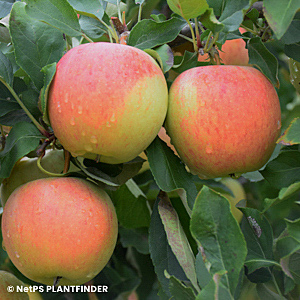
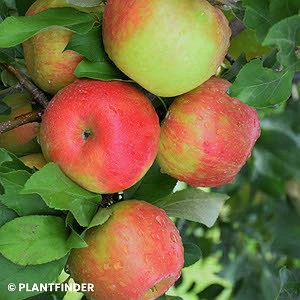
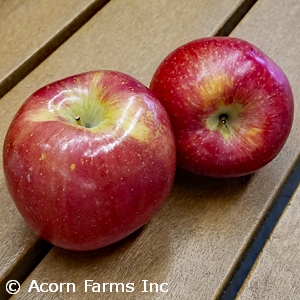
GALA APPLE TREE
| PLANT | SIZE | TYPE | GALENA | ADD'L | DIG | SOON |
|---|---|---|---|---|---|---|
| MALUS GALA | con 10 | 26 | 0 | 0 | 0 |
Current inventory will be listed above this line. Contact Sales Rep for details. | Click for key & info
To help this tree settle in and thrive, we recommend these standard planting practices: Plant in deep, fertile, well-draining soil, selecting a location that receives full sun to ensure optimal fruit production and foliage color. Apple trees are sensitive to standing water, so avoid planting in low-lying areas where water collects. Provide deep, regular watering during the first few growing seasons until the tree is well established and ensure you verify the soil drainage before planting.
Maintenance is uniform across most edible cultivars: Prune in late winter or early spring while the tree is dormant to improve air circulation, control shape, and encourage productive growth. Apply a layer of organic mulch around the root zone to conserve moisture and suppress weeds, keeping the material pulled back from the trunk to prevent decay. Most apple trees require cross-pollination from a different, compatible variety to produce a reliable harvest, so always ensure you have a pollinator partner nearby.
ALSO AVAILABLE:



★ ON SALE ★