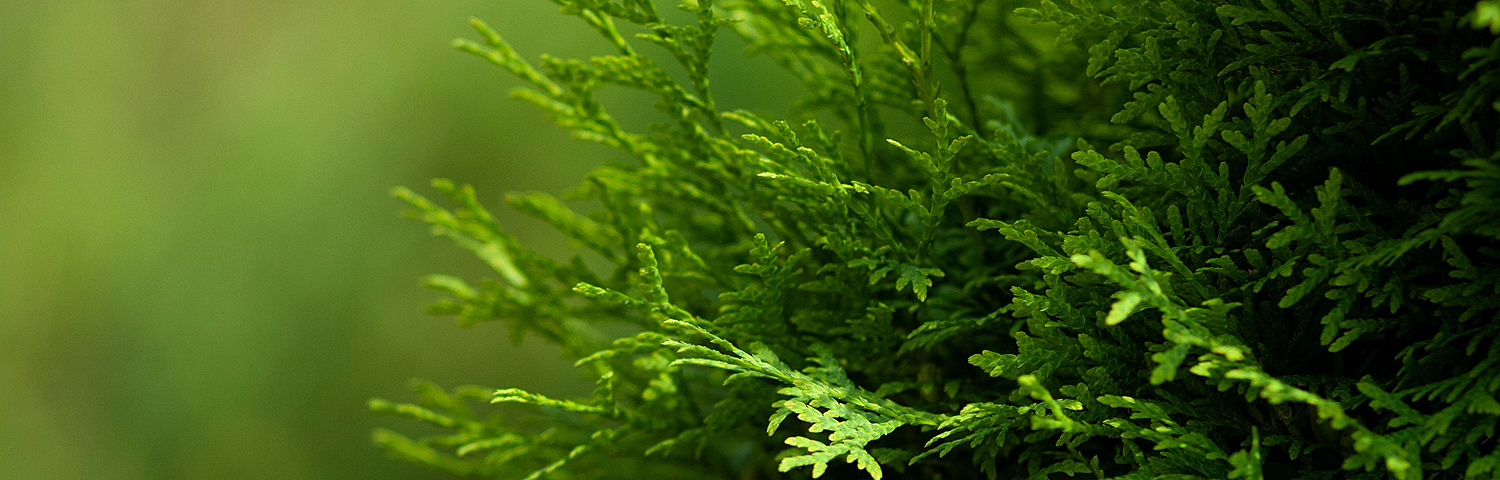
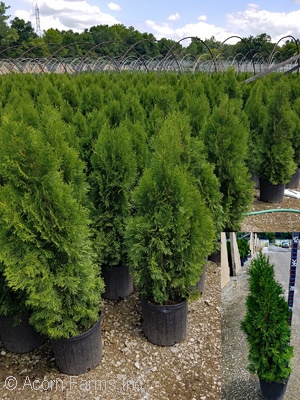
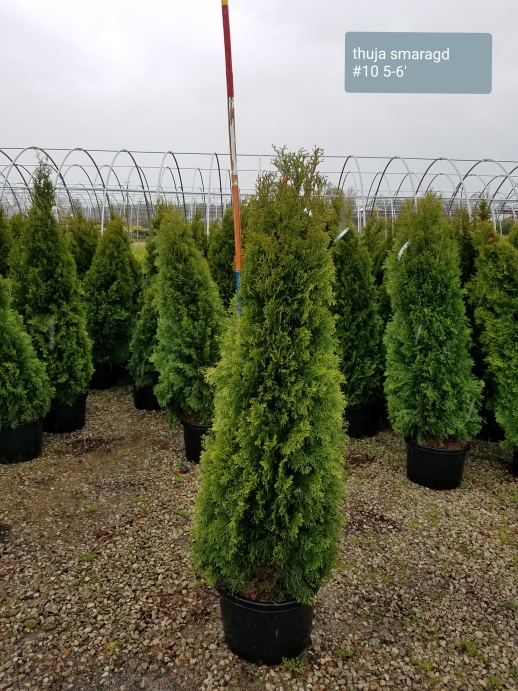
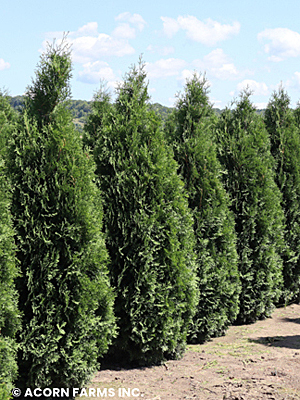
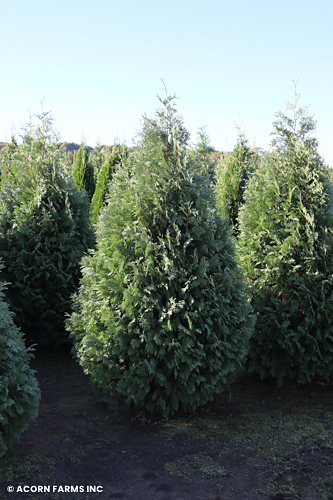
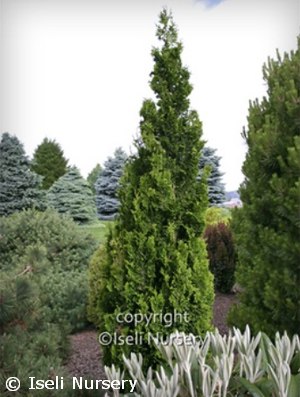
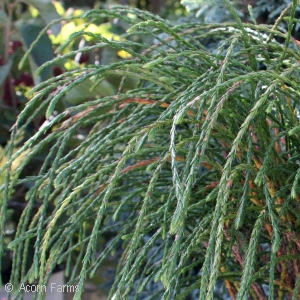
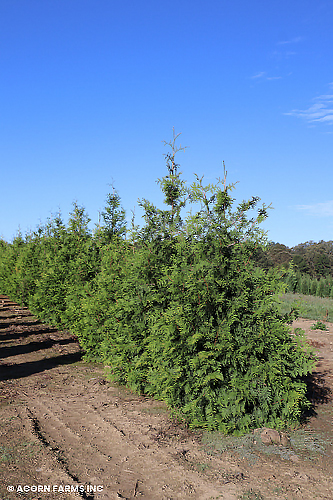
EMERALD GREEN ARBORVITAE
| PLANT | SIZE | TYPE | GALENA | ADD'L | DIG | SOON |
|---|---|---|---|---|---|---|
| THUJA OCC SMARAGD | con 5 | SPIRAL | 6 | 0 | 0 | 0 |
| THUJA OCC SMARAGD | con 7 | 4 ft | 33 | 0 | 0 | 0 |
| THUJA OCC SMARAGD | con 10 | 1943 | 0 | 0 | 29 | |
| THUJA OCC SMARAGD | con 15 | 81 | 0 | 0 | 0 | |
| THUJA OCC SMARAGD | con 15 | SPIRAL | 1 | 0 | 0 | 0 |
| THUJA OCC SMARAGD | con 25 | SPIRAL | 1 | 0 | 0 | 0 |
| THUJA OCC SMARAGD | 5-6 ft | 309 | 0 | 0 | 0 | |
| THUJA OCC SMARAGD | 6-7 ft | 246 | 0 |
1 | 0 | |
| THUJA OCC SMARAGD | 7-8 ft | 58 | 0 |
52 | 0 | |
| THUJA OCC SMARAGD | 8-10 ft | 1 | 0 | 0 | 0 |
Current inventory will be listed above this line. Contact Sales Rep for details. | Click for key & info
To help this plant settle in and thrive, we recommend these standard planting practices: Plant in fertile, well-draining soil, selecting a location that receives full sun to partial shade for the best foliage density and color. These evergreen species are adaptable, but they require consistent moisture to remain healthy and vibrant, particularly during the first few growing seasons until the root system is well established. Prune in late winter or early spring to remove dead wood or to lightly shape the plant, avoiding deep cuts into old wood where foliage will not regrow. Apply a layer of organic mulch around the root zone to conserve moisture and suppress weeds, taking care to keep the material a few inches away from the crown to prevent stem rot.
More in this Genus:




★ ON SALE ★