FIREBREATHER BEARDED IRIS
IRIS GER FIREBREATHER
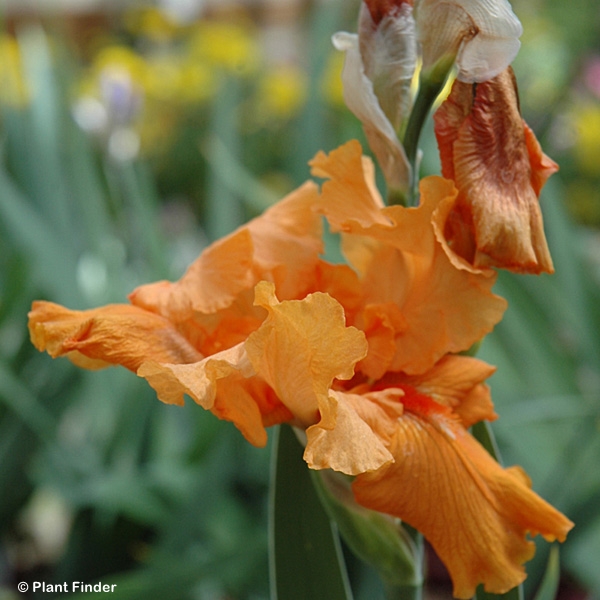
Iris germanica 'Firebreather'
photo courtesy of Plant Finder
FIREBREATHER BEARDED IRIS
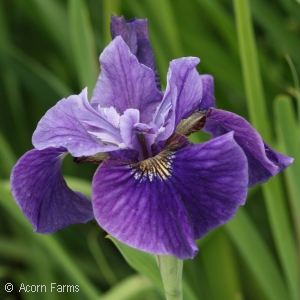
Iris germanica 'Firebreather' (Firebreather Bearded Iris) is a popular Bearded Iris celebrated for its exceptionally vibrant and uniform deep orange color. Its flowers are distinguished by brilliant orange standards and falls, intensely contrasted by a vivid tangerine or scarlet beard, giving it a luminous, fiery appearance that makes it an outstanding focal point in the late spring to early summer garden. A valuable characteristic of 'Firebreather' is its reliable reblooming habit, often producing a second flush of sweet-scented flowers later in the fall. The plant grows on strong, well-branched stalks that reach 3 to 4 feet in height above a clump of attractive blue-green, sword-like foliage, making it a dramatic, upright accent ideal for perennial borders and cutting gardens.
'Firebreather' Bearded Iris requires at least six hours of full sun daily and, most critically, excellent soil drainage to prevent the rhizomes from rotting. Like all bearded irises, its thick, fleshy rhizomes should be planted either exposed or just barely covered with soil. It is a hardy and low-maintenance plant, thriving across USDA Zones 3-9, and is naturally resistant to deer and rabbits. For continuous vigor and generous flowering, gardeners should divide the clumps every three to four years when they become overcrowded and apply a low-nitrogen fertilizer in the early spring, with a second application after the first bloom to encourage reblooming.
Scroll table horizontally to view all stock & quantities →
| PLANT |
SIZE |
TYPE |
GALENA |
ADD'L |
DIG |
SOON |
| No current sizes listed in database. |
Current inventory will be listed above this line. Contact Sales Rep for details. |
Click for key & info
KEY:
con = containers - available now
Galena = Above ground and available now
Additional = Remote location, call rep. Not in Shop.
Dig = Still in ground, call rep. Not in Shop (in orange).
Soon = Coming soon, call rep. Not in Shop.
(BBnPOT - formerly known as GRSTART - are B&B put into a container - they are available now)