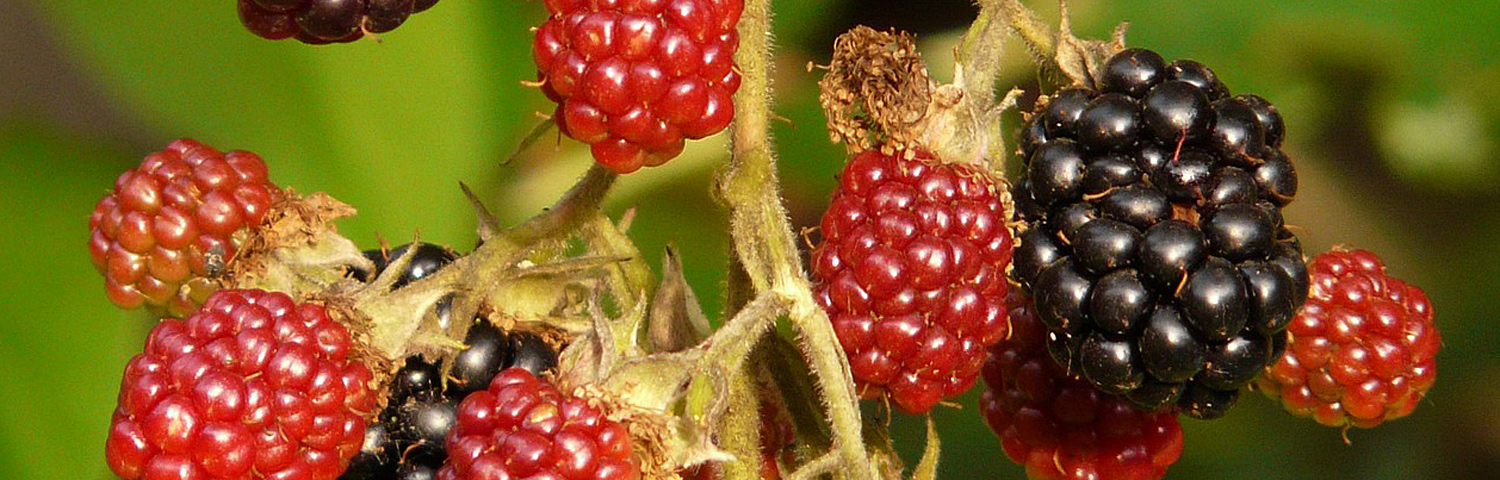
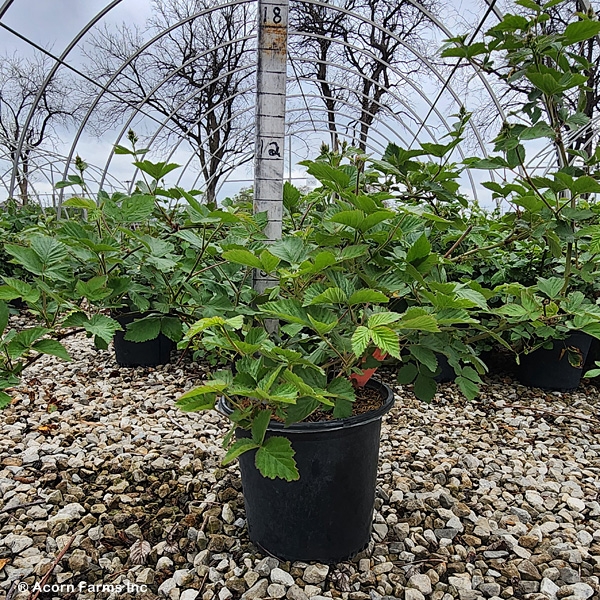
BLACK SATIN THORNLESS BLACKBERRY
| PLANT | SIZE | TYPE | GALENA | ADD'L | DIG | SOON |
|---|---|---|---|---|---|---|
| RUBUS FRU BLACK SATIN | con 2 | 190 | 0 | 0 | 0 |
Current inventory will be listed above this line. Contact Sales Rep for details. | Click for key & info
To help these plants settle in and thrive, we recommend these standard planting practices: Plant in deep, fertile, well-draining, slightly acidic soil, selecting a location that receives full sun to promote the best fruit color and production. These brambles require consistent moisture to remain healthy and productive, particularly during fruit development, so provide irrigation during dry periods. While they are adaptable, they do not tolerate waterlogged soil, which can lead to root diseases.
Maintenance is largely similar, though pruning strategies depend on whether the variety is primocane-bearing (producing fruit on first-year canes) or floricane-bearing (producing fruit on second-year canes). Prune out spent canes after harvest or in late winter to maintain vigor and prevent overcrowding. Apply a layer of organic mulch around the root zone to conserve moisture and suppress weeds, taking care to keep the material a few inches away from the crown to prevent stem rot. Support systems like trellises are often necessary for both to manage growth and keep berries off the ground.
More in this Genus:
★ ON SALE ★