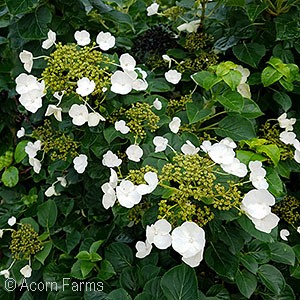
CLIMBING HYDRANGEA
| PLANT | SIZE | TYPE | GALENA | ADD'L | DIG | SOON |
|---|---|---|---|---|---|---|
| HYDRANGEA PETIOLARIS | con 3 | BI | 3 | 0 | 0 | 0 |
| HYDRANGEA PETIOLARIS | con 3 | STAKE | 94 | 0 | 0 | 0 |
| HYDRANGEA PETIOLARIS | con 5 | STAKE | 1 | 0 | 0 | 0 |
Current inventory will be listed above this line. Contact Sales Rep for details. | Click for key & info
To help this plant settle in and thrive, we recommend these standard planting practices: Plant in rich, well-draining, slightly acidic soil. Provide a sturdy trellis, wall, or fence, as this variety is a climber that requires structural support. It thrives in partial to full shade, making it an excellent choice for north-facing exposures. Water regularly to maintain consistent soil moisture, especially during the first two years of establishment. Prune sparingly and only immediately after flowering to maintain shape; avoid pruning in late winter or early spring, as this will remove the following season's flower buds.
ALSO AVAILABLE:




★ ON SALE ★