MAY APPLE
PODOPHYLLUM PELTATUM
Podophyllum peltatum
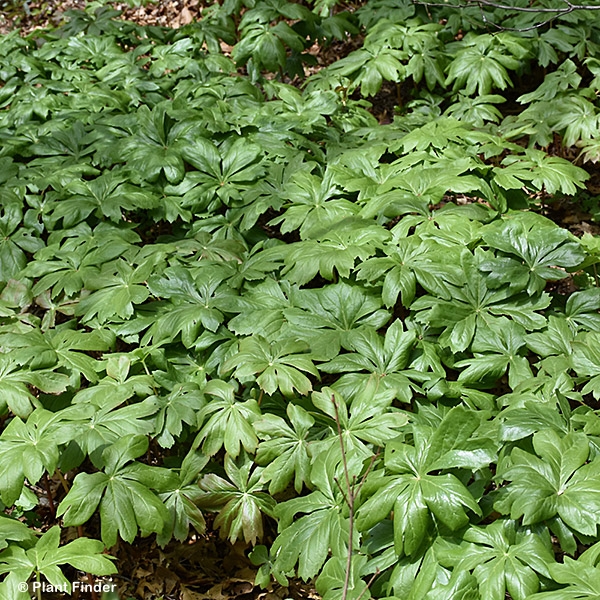
photo courtesy of Plant Finder
MAY APPLE
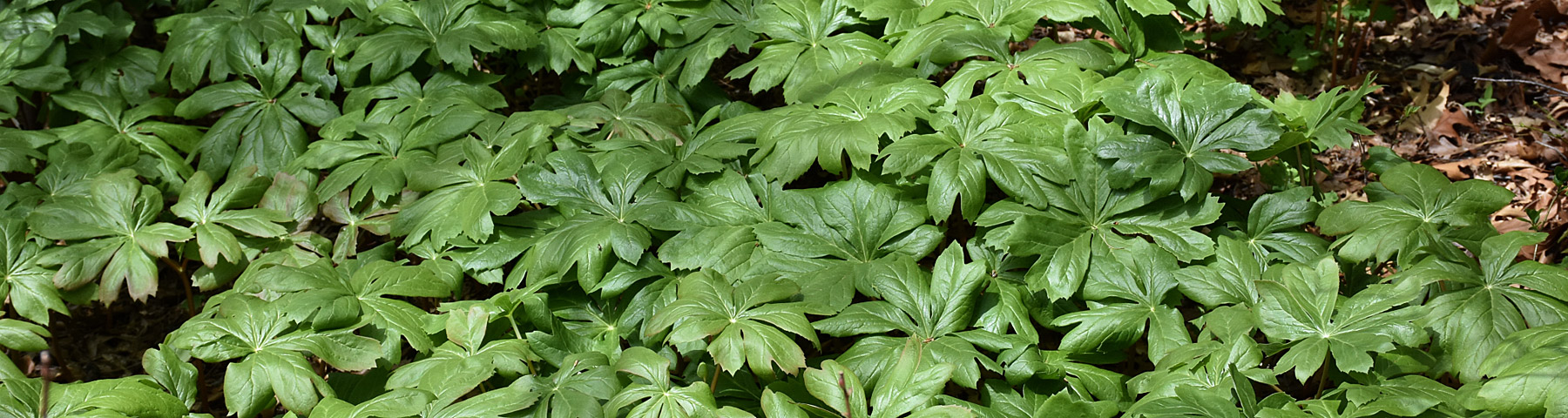
Podophyllum peltatum, commonly known as May Apple, is a distinctive North American native that signals the arrival of spring in the woodland landscape. It belongs to the Berberidaceae Series (or Barberry family) and is characterized by its large, umbrella-like leaves that can reach up to a foot in diameter. While non-flowering stems produce only a single leaf, flowering stems emerge with a pair of leaves, between which a solitary, waxy white flower dangles. These blooms, though beautiful and fragrant, are often hidden beneath the dense foliage. By mid-summer, the flowers give way to egg-shaped green fruits that ripen to a golden yellow, though gardeners should note that with the exception of the fully ripe fruit, all parts of the plant are highly toxic.
For its ideal spot, the May Apple (also known as Mayapple) thrives in the dappled light of a deciduous forest, preferring partial to full shade and rich, moist, organic soil. It is an excellent choice for naturalizing in woodland gardens or shady borders, where its creeping rhizomes will eventually form a lush, robust colony. Because this species typically goes dormant and disappears by late summer, it is best planted alongside later-emerging perennials like Hostas or Ferns to fill the resulting gap in the landscape.
Scroll table horizontally to view all stock & quantities →
| PLANT |
SIZE |
TYPE |
GALENA |
ADD'L |
DIG |
SOON |
| No current sizes listed in database. |
Current inventory will be listed above this line. Contact Sales Rep for details. |
Click for key & info
KEY:
con = containers - available now
Galena = Above ground and available now
Additional = Remote location, call rep. Not in Shop.
Dig = Still in ground, call rep. Not in Shop (in orange).
Soon = Coming soon, call rep. Not in Shop.
(BBnPOT - formerly known as GRSTART - are B&B put into a container - they are available now)