 Protected Series:
Zone: 3
Protected Series:
Zone: 3COMMON WITCH HAZEL
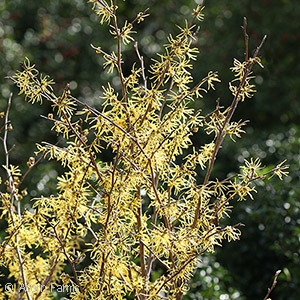
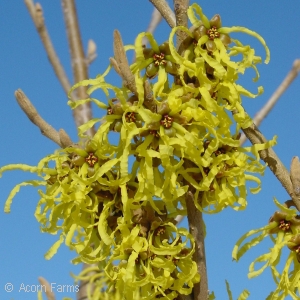
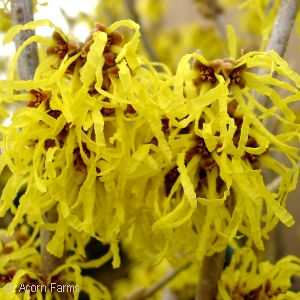
Hamamelis virginiana is commonly referred to as Common Witch Hazel or American Witch Hazel. It is a fall blooming, multi-stemmed, deciduous shrub or small tree that is long-lived and native to woodland settings. It features fragrant yellow blooms that appear in October and November when other species have lost their leaves. Flowers consist of very unique crinkled ribbon-like petals. New leaves emerge reddish-bronze in spring and turn brilliant gold in fall.
The Common Witch Hazel thrives in full sun to part shade in rich, acidic, evenly moist, well-drained soils. As a woodland understory shrub, it appreciates some shade in the afternoon.
| PLANT | SIZE | TYPE | GALENA | ADD'L | DIG | SOON |
| HAMAMELIS VIRGINIANA | con 5 | 0 | 0 | 0 | 194 |
Current inventory will be listed above this line. This plant will not be in the cart if there is no Galena stock listed. Contact Sales Rep for details. | Click for Availability column key & information.
To help this plant settle in and thrive, we recommend these standard planting practices: Plant in deep, fertile, well-draining soil with a slightly acidic pH, choosing a location that provides full sun to partial shade. These shrubs prefer a site where the soil remains consistently moist, so provide regular water during the first few growing seasons until the root system is well established. Pruning should be minimal and performed immediately after flowering, focusing only on removing dead or crossing branches to maintain their natural, open form. Apply a generous layer of organic mulch around the root zone to stabilize soil temperature and conserve moisture, ensuring the material is kept away from the crown to prevent stem rot.
ALSO AVAILABLE:
★ ON SALE ★