SAHARA™ BLACKBIRD SPURGE
EUPHORBIA BLACKBIRD
Euphorbia Sahara™ Blackbird PP17178
photo courtesy of Plant Finder
SAHARA™ BLACKBIRD SPURGE
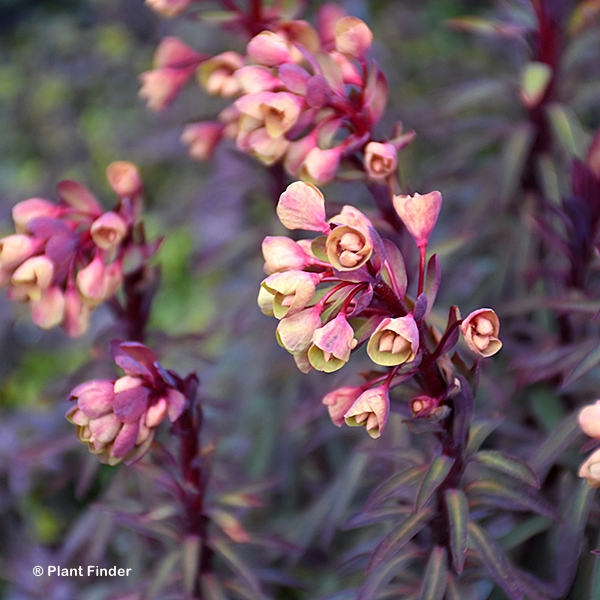
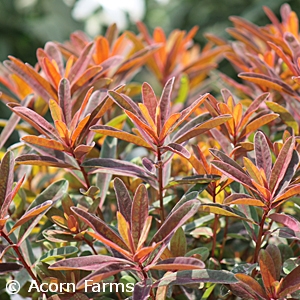
Euphorbia Sahara™ 'Blackbird' (sometimes referred to as 'Nothowlee') is a striking evergreen sub-shrub celebrated for its dramatic, deep burgundy-to-near-black foliage. This compact cultivar maintains a dense, mounded habit that provides year-round architectural interest in the garden. In spring, the dark stems are topped with contrasting lime-yellow bracts, creating a vivid "neon" effect against the dark leaves. This color combination makes it a favorite for modern landscape designs and mixed containers, where its moody texture can serve as a focal point among silver-leaved plants or bright perennials.
For the best results, Euphorbia 'Blackbird' should be planted in a spot that receives full sun, as maximum light exposure is necessary to develop and maintain its intense dark pigmentation. It is highly drought-tolerant once established and requires sharply drained soil to prevent root rot; it will not tolerate "wet feet" or heavy, waterlogged clay. It is generally hardy in USDA zones 6 through 9 and is notably deer and rabbit resistant due to the milky white sap within its stems.
Scroll table horizontally to view all stock & quantities →
| PLANT |
SIZE |
TYPE |
GALENA |
ADD'L |
DIG |
SOON |
| EUPHORBIA BLACKBIRD | con 1 | | 15 | 0 | 0 | 0 |
Current inventory will be listed above this line. Contact Sales Rep for details. |
Click for key & info
KEY:
con = containers - available now
Galena = Above ground and available now
Additional = Remote location, call rep. Not in Shop.
Dig = Still in ground, call rep. Not in Shop (in orange).
Soon = Coming soon, call rep. Not in Shop.
(BBnPOT - formerly known as GRSTART - are B&B put into a container - they are available now)