Search accepts botanical/common names, sizes, attributes, and current or mature size requests simultaneously.
✓ Natural Descriptors "15-18 in white flowering shrubs for partial sun"; "container deciduous trees that mature at 10-15' tall"; "BB boxwood 18-36"" (finds entire size range)
✓ Special Attributes "Deer resistant, native shrubs that attract butterflies"; "topiary shrubs"
✓ Find Current/Mature Sizes "2 in or 2.5 in maples with red fall color"; "6-10' tall spruce mature"; "boxwood 3-5' wide mature"; "#3 Hydrangeas with white flowers"
✓ Use 'or' with plant color "red or yellow flowering perennials"
✓ Exclude Terms (using NOT) "#3, #5 grasses NOT Miscanthus, Pennisetum" ('NOT' in all caps)
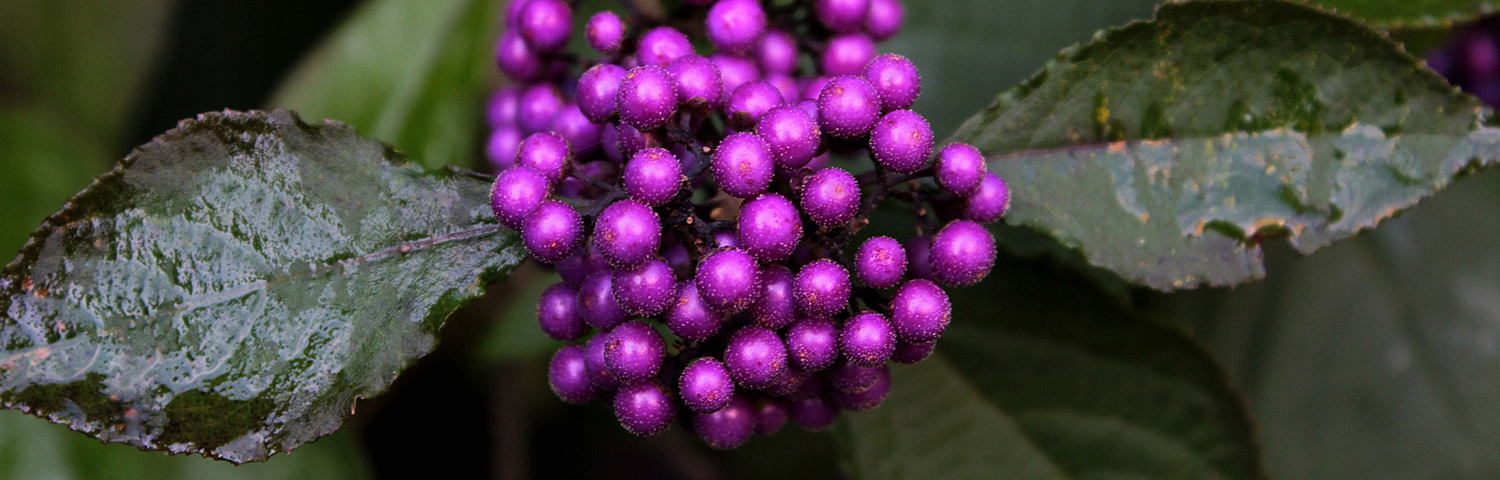
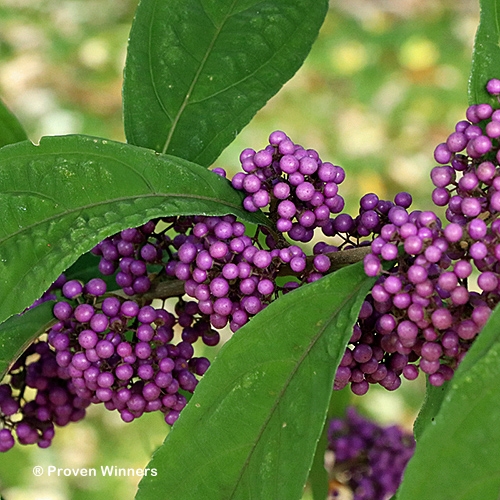
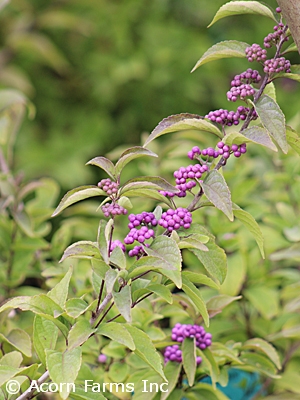
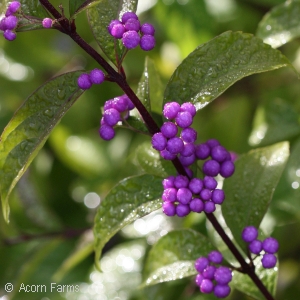
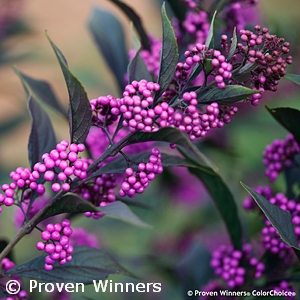
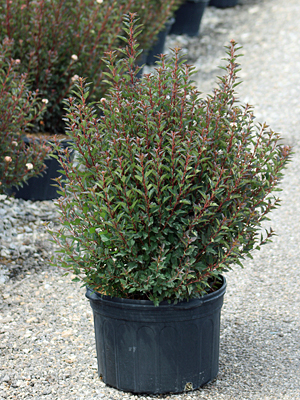
Callicarpa Bubble Up™ is a charming and compact twist on the traditional Beautyberry, bred for its prolific fruit production and more compact habit. Unlike older varieties that can become leggy or sprawling, Bubble Up™ maintains a dense, rounded shape that stays around 4 to 5 feet tall and 2 to 3 feet wide. In late spring to early summer, Bubble Up™ is covered in clusters of small, pinkish-white flowers that are a magnet for pollinators. In fall the branches become heavily weighted with unusually large, neon-purple berries that persist long after the foliage has dropped, providing a stunning architectural element in the winter garden.
Bubble Up™ Beautyberry thrives in full sun, as shaded locations will result in fewer fruits and a looser growth habit. It is highly adaptable to most soil types but performs best in well-draining soil with consistent moisture; it is generally more drought-tolerant once it has fully established its root system. Bubble Up™ is ideal for small urban gardens, mixed borders, or decorative patio containers where its vivid fall color can be viewed up close.
Scroll table horizontally to view all stock & quantities →
PLANT
SIZE
TYPE
GALENA
ADD'L
DIG
SOON
CALLICARPA BUBBLE UP
con 3
PWINNER
62
0
0
0
Current inventory will be listed above this line. Contact Sales Rep for details. |
Click for key & info
KEY: con = containers - available now Galena = Above ground and available now Additional = Remote location, call rep. Not in Shop. Dig = Still in ground, call rep. Not in Shop (in orange). Soon = Coming soon, call rep. Not in Shop.
(BBnPOT - formerly known as GRSTART - are B&B put into a container - they are available now)
CALLICARPA VARIETIES
Callicarpa Varieties: Callicarpa bodinier (Profusion Beautyberry) Bodinier's Beautyberry is from China and is an upright deciduous shrub with greater cold tolerance than the Callicarpa americana (Zones 5-8) and features pale pink flower clusters from June to August on new growth. Vibrant, deep purple berries appear after, along the entire length of its arching stems, and ripen in fall. Leaves mature to light yellow and fall before the berries. Berries persist until early winter and are a great source of food for many bird species. It is larger than the Callicarpa dichotoma and reaches 6-7 feet tall and wide. It is self-fertile and does not require a pollinator.
Callicarpa dichotoma (Purple Beautyberry) Callicarpa dichotoma is from China. It is a smaller, rounded, and more compact deciduous shrub that has greater cold tolerance than Callicarpa americana (Zones 5-8). It is smaller than Callicarpa bodinier with a height and spread of just 4 foot. It bears pink flowers and bright purple fruit. Leaves mature to light yellow and fall before the berries. Berries persist until early winter and are a great source of food for many bird species. It is self-fertile and does not require a pollinator.
To help this plant settle in and thrive, we recommend these standard planting practices: Plant in well-draining, fertile soil in a location that receives full sun to partial shade, as sufficient light exposure is essential for maximizing the vibrant berry display later in the season. These shrubs are adaptable to a range of soil types but require consistent moisture during the first year of establishment to ensure long-term vigor. Prune in late winter or early spring before new growth begins, as flowers and fruit are produced on new wood, allowing you to control the plant size and stimulate strong, fruit-bearing stems. Apply a layer of organic mulch around the root zone to conserve moisture, keeping it away from the crown to prevent stem rot.