BERBERIS THU ROSY ROCKET ACORN FARMS
ROSY ROCKET BARBERRY

BERBERIS THU ROSY ROCKET

Berberis thunbergii f. atropurpurea 'Rosy Rocket' PPAF
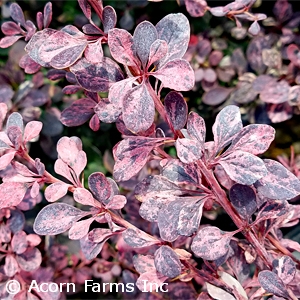
photo courtesy of Plant Finder

ROSY ROCKET BARBERRY

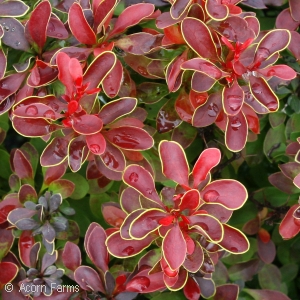
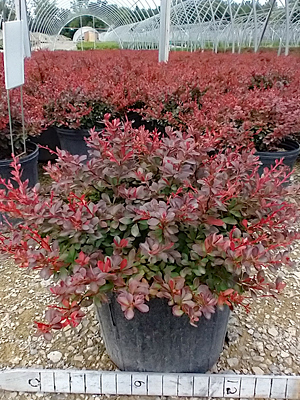
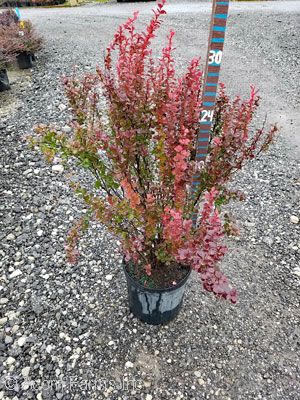
Berberis thunbergii 'Rosy Rocket' is commonly referred to as the Rosy Rocket Japanese Barberry. It is a tight, upright barberry with soft pink and burgundy variegated new growth that turns deep burgundy in summer, creating a unique bi-color look. Yellow flowers appear in spring and are followed by bright red berries in fall which the birds love. Fruit often remains into winter creating winter interest.

Rosy Rocket has best foliage color in full sun although it can do well in part sun. Rosy Rocket enjoys average moisture and well-drained soils. It will not tolerate standing water. It is drought, pollution and deer tolerant and is ideal for beds, borders and foundation plantings.
Scroll table horizontally to view all stock & quantities →
PLANT SIZE TYPE GALENA ADD'L DIG SOON
No current sizes listed in database.

Current inventory will be listed above this line. Contact Sales Rep for details. |

KEY:
con = containers - available now
Galena = Above ground and available now
Additional = Remote location, call rep. Not in Shop.
Dig = Still in ground, call rep. Not in Shop (in orange).
Soon = Coming soon, call rep. Not in Shop.

(BBnPOT - formerly known as GRSTART - are B&B put into a container - they are available now)


Planting Tips ⓘ

To help this plant settle in and thrive, we recommend these standard planting practices: Plant in well-draining soil with a pH ranging from slightly acidic to neutral. Select a location in full sun to partial shade, noting that maximum sunlight is required to achieve the most vibrant foliage color throughout the season. This species is highly adaptable and exhibits excellent drought tolerance once established, requiring supplemental water only during extended dry periods. Prune in late winter or early spring to maintain size or remove old growth, keeping in mind that heavy gloves are recommended when handling this plant due to its sharp thorns.


More in this Genus: