 Protected Series:
Zone: 3
Protected Series:
Zone: 3RED OCTOBER BIG BLUESTEM
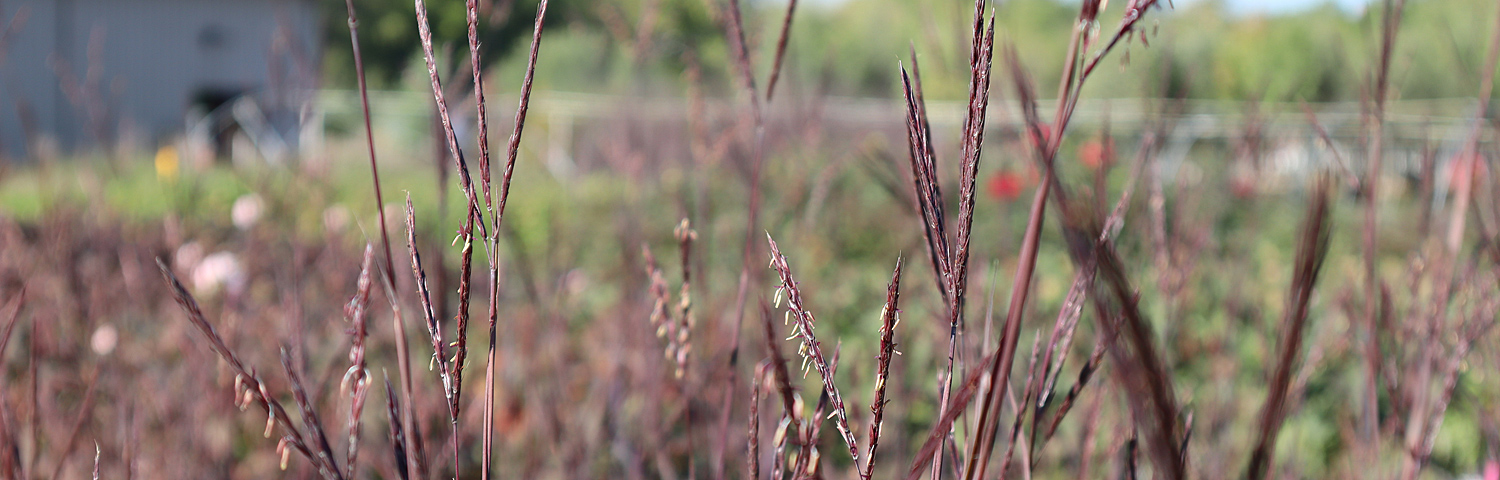
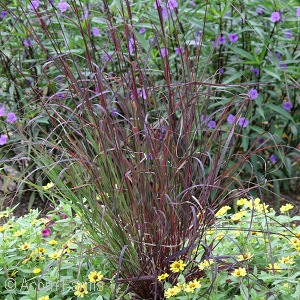
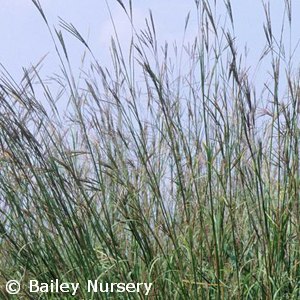
Andropogon gerardii 'Red October' is a spectacular native root cultivar of Big Bluestem, famous for having some of the most vivid autumnal colors of any ornamental grass. While its cousin 'Blackhawks' leans toward deep purples and blacks, 'Red October' lives up to its name by shifting from deep green with red highlights in the spring to a brilliant, fiery scarlet after the first frost. Growing to a majestic 5 to 6 feet tall with a narrow, 2-foot spread, it maintains a strong upright habit that adds significant vertical interest and movement to the landscape. In late summer, it produces distinctive three-pronged seed heads that resemble a "turkey foot," which also take on reddish hues, providing a beautiful textural contrast against the changing foliage.
For the best color and health, 'Red October' should be planted in full sun; inadequate light will cause the stems to lose their vibrant red tint and potentially flop over. It is a rugged, low-maintenance plant that thrives in average to lean, well-drained soils and is highly adaptable to both dry conditions and occasional standing water. Maintenance is minimal: simply leave the foliage standing through the winter to enjoy its winter silhouette and provide habitat for birds, then cut the stalks back to about 4-6 inches in late winter or early spring just before new growth begins to emerge.
| PLANT | SIZE | TYPE | GALENA | ADD'L | DIG | SOON |
| ANDROPOGON GER RED OCTOBER | con 2 | 12 | 0 | 0 | 0 |
Current inventory will be listed above this line. This plant will not be in the cart if there is no Galena stock listed. Contact Sales Rep for details. | Click for Availability column key & information.
To help Andropogon gerardii varieties settle in and thrive, we recommend these standard planting practices: Plant in full sun in average, well-draining soil. Andropogon gerardii (Big Bluestem) is a deep-rooted, highly adaptable native grass that performs best in open, sunny conditions where it can develop its characteristic upright habit and unique "turkey foot" seed heads. While it is tolerant of a wide range of soil types, including heavy clay, it requires good drainage and is quite drought-tolerant once established. Water regularly during the first growing season to encourage deep root development. In late winter or very early spring, cut the foliage back to a few inches above the ground to promote fresh, vigorous growth for the upcoming season.
ALSO AVAILABLE:
★ ON SALE ★