 Protected Series:
Zone: 4
Protected Series:
Zone: 4ROBINSONS RED PAINTED DAISY
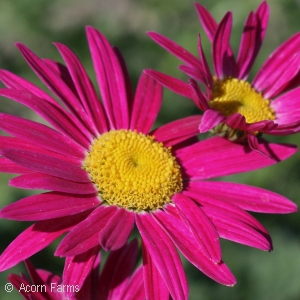
Tanacetum coccineum 'Robinson's Red', commonly known as the Painted Daisy, is a vibrant perennial that brings a punch of saturated color to the early summer garden. It features large, daisy-like flowers with striking crimson-red petals surrounding a bright yellow central disk. These bold blooms are held aloft on sturdy, wiry stems that rise from a mound of delicate, fern-like, bright green foliage. The fine, feathery texture of the leaves provides a soft, airy contrast to the vivid flowers, making the plant a standout in traditional perennial borders. Because of its upright habit and long-lasting blooms, it is also an exceptional choice for cut flower arrangements.
To keep 'Robinson's Red' Painted Daisy looking its best, it should be planted in full sun and well-drained soil. It is particularly sensitive to "wet feet," especially during the winter, so ensuring the site doesn't hold standing water is crucial for its longevity. While it is relatively low-maintenance, deadheading spent flowers is highly recommended to keep the plant tidy and potentially encourage a smaller, secondary flush of blooms later in the season. Over time, the clumps can become quite dense, so dividing the plant every three years or so in early spring will help maintain its vigor. It is ideally suited for the middle of a sunny border or a dedicated cutting garden where its brilliant red hues can truly pop.
| PLANT | SIZE | TYPE | GALENA | ADD'L | DIG | SOON |
Current inventory will be listed above this line. This plant will not be in the cart if there is no Galena stock listed. Contact Sales Rep for details. | Click for Availability column key & information.
To help this plant settle in and thrive, we recommend these standard planting practices: Plant in well-draining soil with full sun. Water regularly, but avoid overwatering. Mulch around the base to retain moisture and suppress weeds. Fertilize lightly in the spring with a balanced fertilizer.
ALSO AVAILABLE:
No other plants currently in stock for this genus.★ ON SALE ★