FLAME WILLOW
SALIX ALBA FLAME
Salix alba 'Flame'
photo courtesy of Plant Finder
FLAME WILLOW
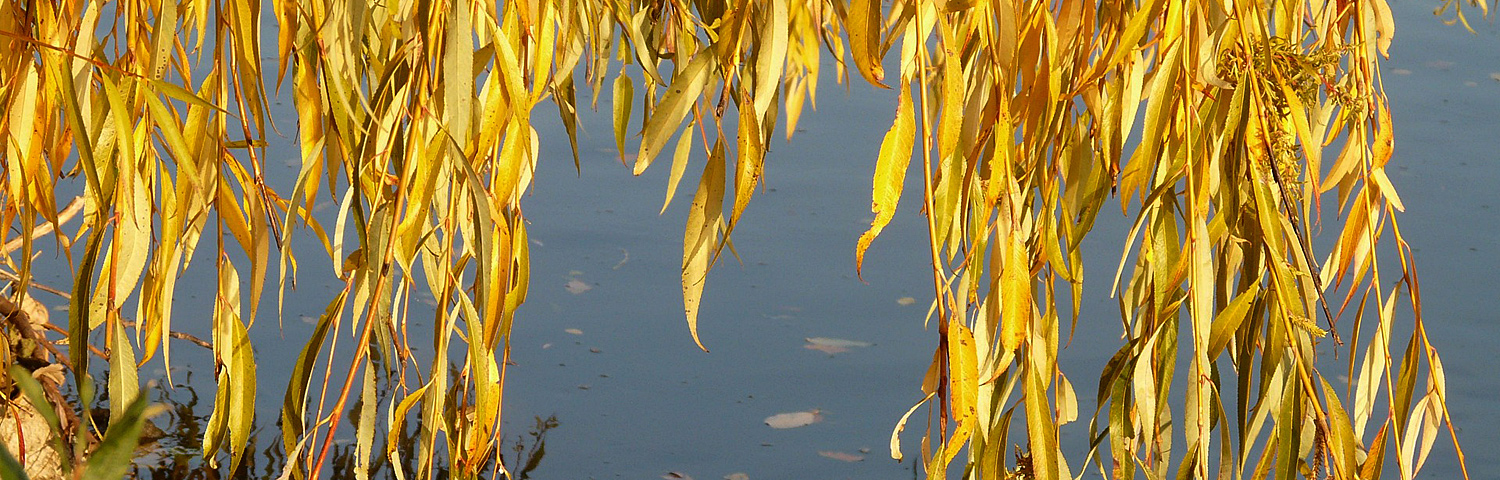
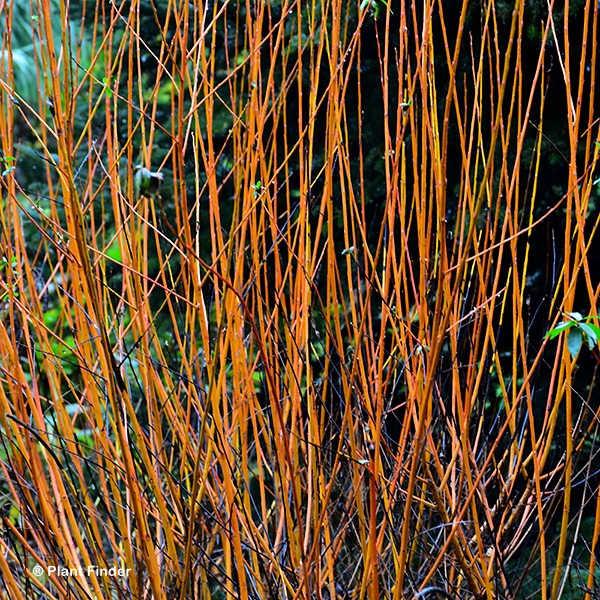
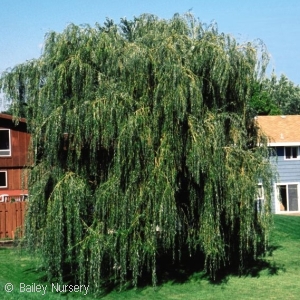
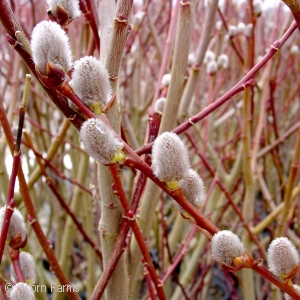
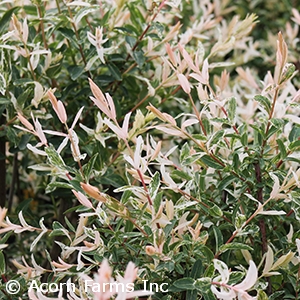
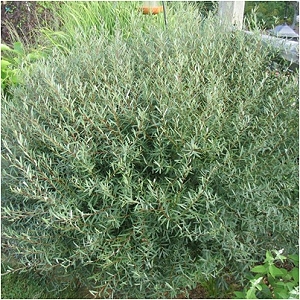
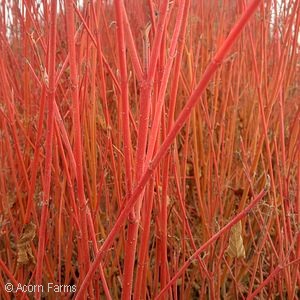
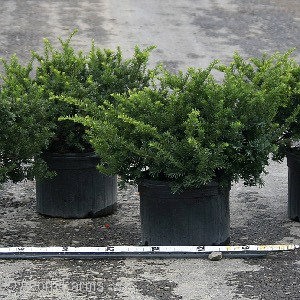
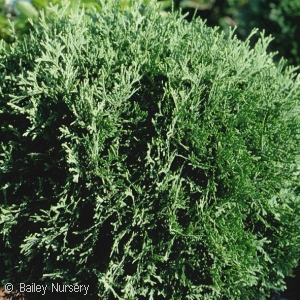
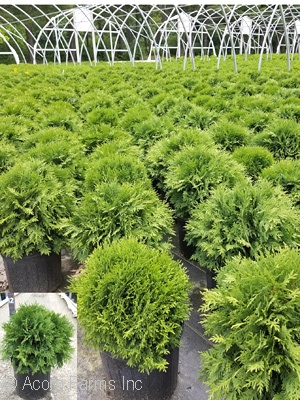
Salix alba 'Flame', commonly known as the Flame Willow, is a deciduous shrub or small tree primarily grown for its spectacular winter interest. During the growing season, it features narrow, lance-shaped green leaves that create a dense, upright form. However, its true appeal begins in late autumn when the foliage turns a golden yellow and eventually drops to reveal brilliant orange-red bark. The younger stems exhibit the most intense coloration, appearing almost incandescent against a winter landscape or a backdrop of snow. It is often used in the landscape to provide a vertical element and a reliable source of warmth and color during the dormant months.
In the landscape, Salix alba 'Flame' is an excellent choice for a focal point, a colorful privacy screen, or for stabilizing soil along a pond or stream bank. It thrives in full sun to partial shade and is remarkably adaptable to various soil types, though it prefers consistent moisture and can even handle boggy or poorly drained areas where other plants might struggle.
Scroll table horizontally to view all stock & quantities →
| PLANT |
SIZE |
TYPE |
GALENA |
ADD'L |
DIG |
SOON |
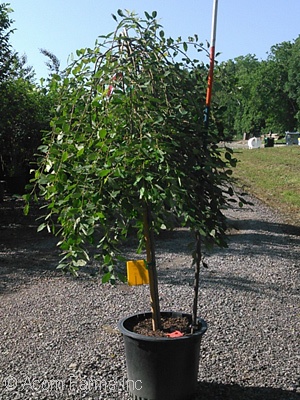
| SALIX ALBA FLAME | con 5 | | 92 | 0 | 0 | 0 |
Current inventory will be listed above this line. Contact Sales Rep for details. |
Click for key & info
KEY:
con = containers - available now
Galena = Above ground and available now
Additional = Remote location, call rep. Not in Shop.
Dig = Still in ground, call rep. Not in Shop (in orange).
Soon = Coming soon, call rep. Not in Shop.
(BBnPOT - formerly known as GRSTART - are B&B put into a container - they are available now)