ZEBRA GRASS
MISCANTHUS SIN ZEBRINUS
Miscanthus sinensis 'Zebrinus'
photo courtesy of Plant Finder
ZEBRA GRASS
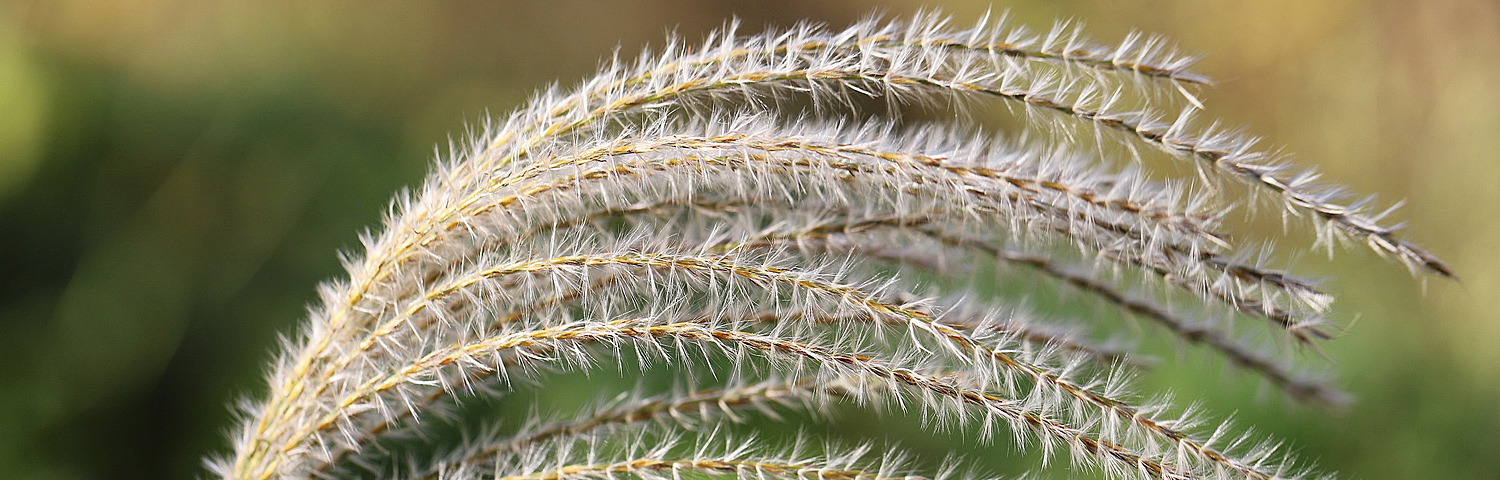
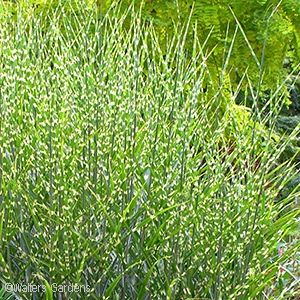
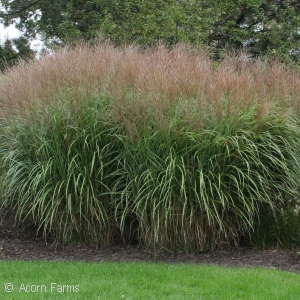
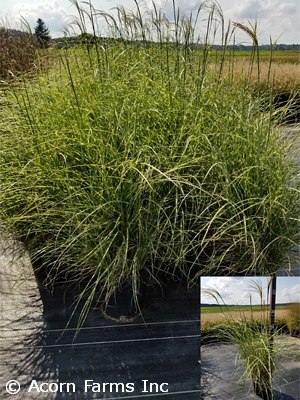
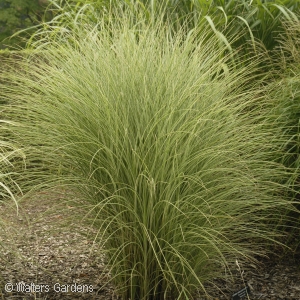
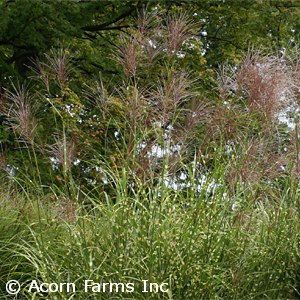
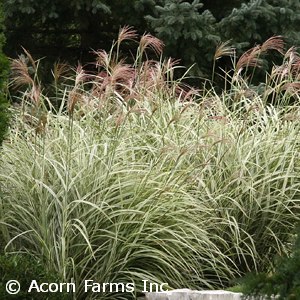
Miscanthus sinensis 'Zebrinus', the original Zebra Grass, is a classic ornamental favorite famous for its exotic, "exclamation point" variegation. It forms a large, graceful mound that typically reaches 6 to 7 feet tall. What sets it apart are the irregular horizontal yellow bands that splash across its deep green blades, resembling the markings of a zebra. Unlike the 'Strictus' variety, which stands stiffly upright, 'Zebrinus' has a much more relaxed, arching habit, often creating a wide, fountain-like silhouette that adds a touch of the tropics to temperate gardens. In late summer, it produces copper-colored flower plumes that rise above the foliage and mature into fluffy, silver-tan seed heads.
Caring for Zebra Grass is remarkably easy, provided it has plenty of space to sprawl. It performs best in full sun, which is essential for the bright yellow bands to develop clearly; in too much shade, the variegation will dim and the plant may "flop" over. Zebra Grass is drought-tolerant once established and can thrive in various soil types, including heavy clay, provided it is well-drained. Because of its arching nature, it may occasionally need a little support if hit by heavy rain. Maintenance is a simple once-a-year chore: in late winter or very early spring, cut the entire clump back to about 6-10 inches from the ground to make way for the fresh, striped growth.
Scroll table horizontally to view all stock & quantities →
| PLANT |
SIZE |
TYPE |
GALENA |
ADD'L |
DIG |
SOON |
| No current sizes listed in database. |
Current inventory will be listed above this line. Contact Sales Rep for details. |
Click for key & info
KEY:
con = containers - available now
Galena = Above ground and available now
Additional = Remote location, call rep. Not in Shop.
Dig = Still in ground, call rep. Not in Shop (in orange).
Soon = Coming soon, call rep. Not in Shop.
(BBnPOT - formerly known as GRSTART - are B&B put into a container - they are available now)