EVERGOLD SEDGE GRASS
CAREX HAC EVERGOLD
Carex hachijoensis 'Aurea-Variegata Evergold'
photo courtesy of Plant Finder
EVERGOLD SEDGE GRASS
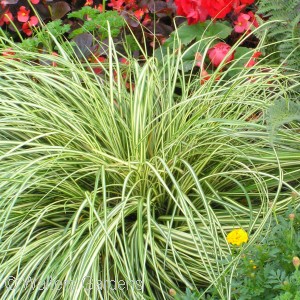
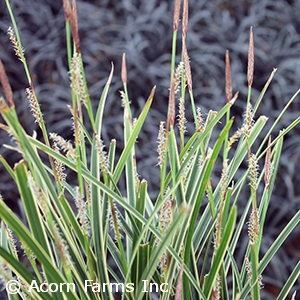
Carex oshimensis 'Evergold', commonly known as Evergold Sedge, is a classic and highly popular ornamental sedge prized for its elegant, weeping habit. This evergreen perennial forms a low, arching mound typically reaching 12 to 15 inches in height and width. Its most striking feature is its variegated foliage, where each narrow blade displays a prominent creamy-white to buttery-yellow central stripe bordered by thin, dark green margins. The plant's graceful, cascading form makes it a perfect choice for softening the edges of containers, spilling over stone walls, or adding a luminous texture to the front of a shady border.
Caring for 'Evergold' is remarkably simple, as it is a resilient and low-maintenance plant that thrives in partial to full shade. While it can tolerate some morning sun in cooler climates, intense afternoon sun can scorch its delicate variegated leaves, so protection is key. It performs best in moist, well-drained soil and should not be allowed to dry out completely, although it is more drought-tolerant than many other sedges once established. Because it is evergreen, you should avoid cutting the plant back to the ground in the spring; instead, simply "comb" through the foliage with your fingers or a small rake to remove any dead or tattered blades, keeping the mound looking fresh and vibrant for the new season.
Scroll table horizontally to view all stock & quantities →
| PLANT |
SIZE |
TYPE |
GALENA |
ADD'L |
DIG |
SOON |
| CAREX HAC EVERGOLD | TRADE 1 | | 108 | 0 | 0 | 0 |
Current inventory will be listed above this line. Contact Sales Rep for details. |
Click for key & info
KEY:
con = containers - available now
Galena = Above ground and available now
Additional = Remote location, call rep. Not in Shop.
Dig = Still in ground, call rep. Not in Shop (in orange).
Soon = Coming soon, call rep. Not in Shop.
(BBnPOT - formerly known as GRSTART - are B&B put into a container - they are available now)