 Protected Series:
Zone: 2
Protected Series:
Zone: 2SMOOTH SUMAC
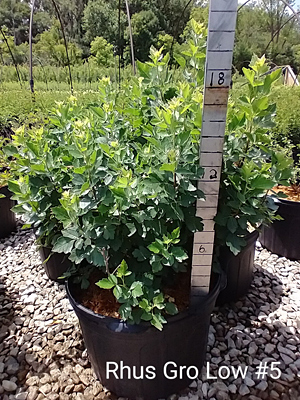
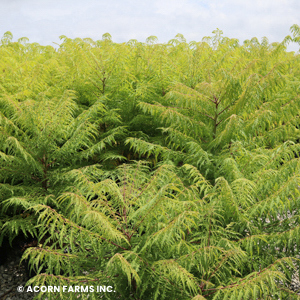
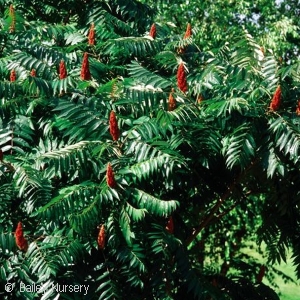
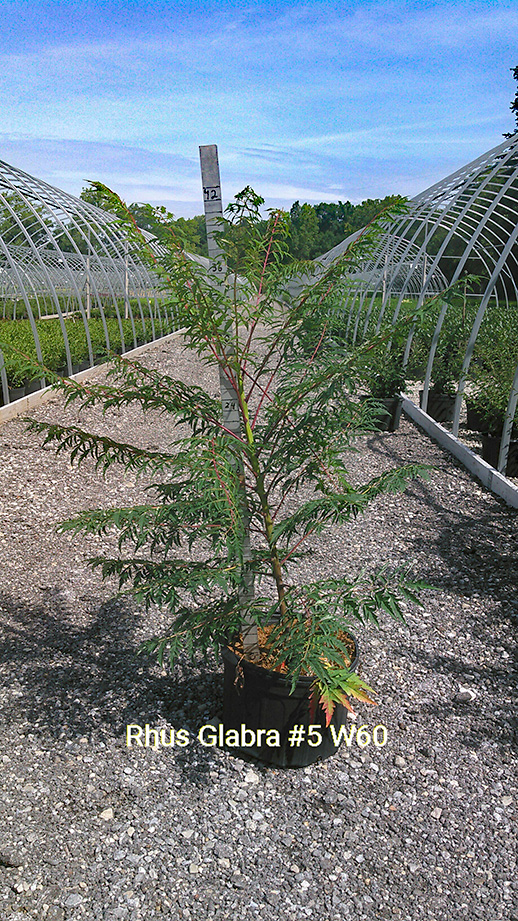
Rhus glabra is commonly referred to as Smooth Sumac. This native, deciduous selection is a colony-forming, open-growing smooth sumac that features sharp-toothed, deciduous leaflets on each side of its branches that turn an impressive orange-red in early fall. On female plants, yellow-green flowers are followed by blazing red, hairy berries in erect, pyramidal clusters which last through winter. The berry-like drupes are juicy which birds love, and deer forage the twigs and fruit. They are also host to numerous species of the lovely and beautiful Hairstreak Butterfly!
Smooth Sumac thrives in full sun in average, well-drained soils. It does not tolerate standing water or poor drainage sites.
| PLANT | SIZE | TYPE | GALENA | ADD'L | DIG | SOON |
| RHUS GLABRA | con 5 | 0 | 0 | 0 | 5 | |
| RHUS GLABRA | con 10 | 2 | 0 | 0 | 0 |
Current inventory will be listed above this line. This plant will not be in the cart if there is no Galena stock listed. Contact Sales Rep for details. | Click for Availability column key & information.
To help this plant settle in and thrive, we recommend these standard planting practices: Plant in well-draining soil, noting that these species are exceptionally adaptable and frequently thrive in poor or rocky sites where other plants struggle. Select a location in full sun to partial shade, which encourages the most vibrant autumn foliage color and consistent growth. While they are highly drought-tolerant once established, provide supplemental water during the first growing season to ensure the root system is well-anchored. Prune in late winter or early spring to remove dead wood or to manage the plant's natural spread, as many varieties in this genus exhibit a vigorous, suckering habit that may need occasional containment depending on your landscape design. These shrubs are incredibly resilient and tolerate hard pruning if rejuvenation is required to keep them looking their best. Apply a layer of organic mulch around the root zone to conserve moisture and suppress weeds, taking care to keep the mulch away from the crown to prevent stem rot.
AVAILABLE VARIETIES: