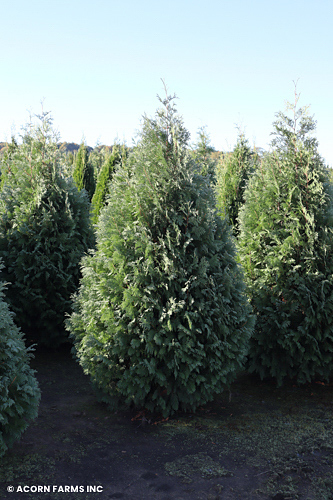
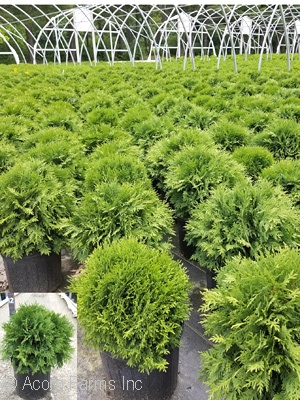
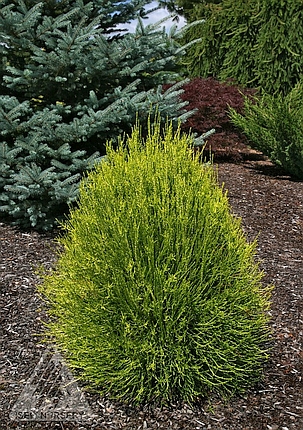
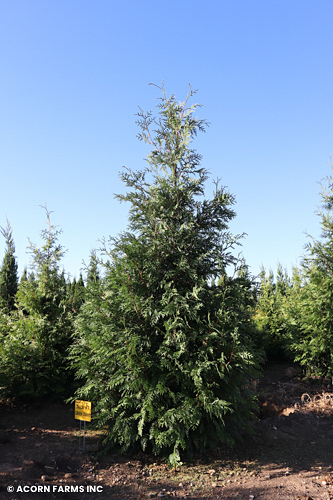
EMERALD GREEN ARBORVITAE
THUJA OCC SMARAGD
Thuja occidentalis 'Smaragd'
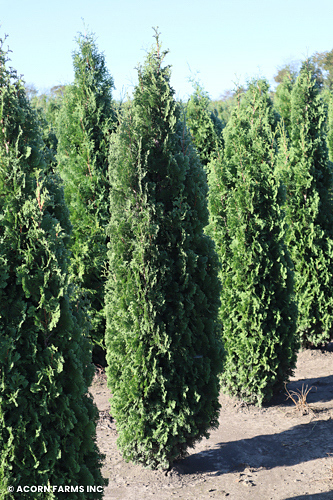
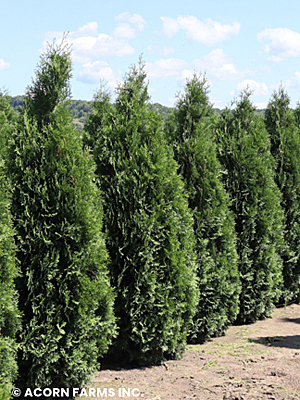
photo copyright Acorn Farms Inc

Genus: THUJA
 Protected Series:
Height: 10 Feet Tall
Spread: 3-5 Feet Wide
Color: green foliage
Full Sun Plants
Full Sun Evergreen Shrub Plants
Evergreen Shrub
Zone: 4
#2231
2231.pdf
THUJA OCC SMARAGD
Grower Notes:
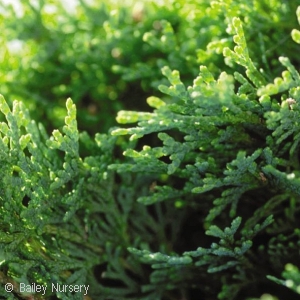
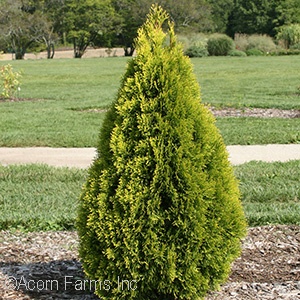
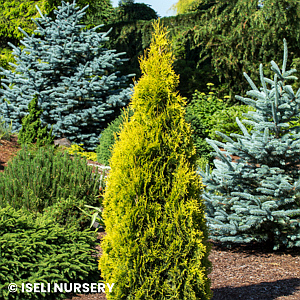
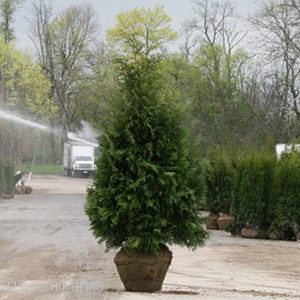
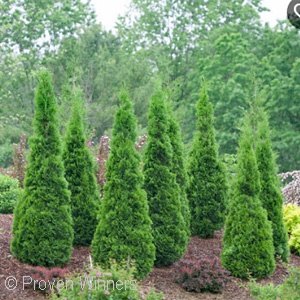
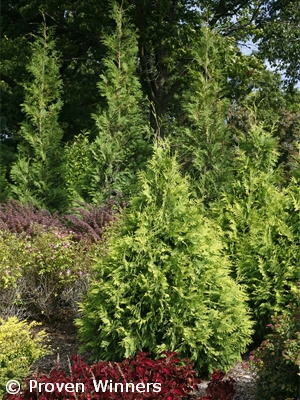
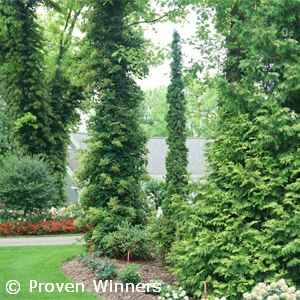
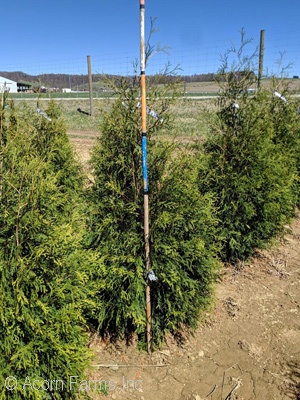
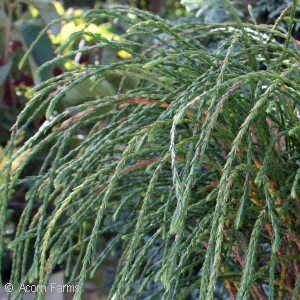
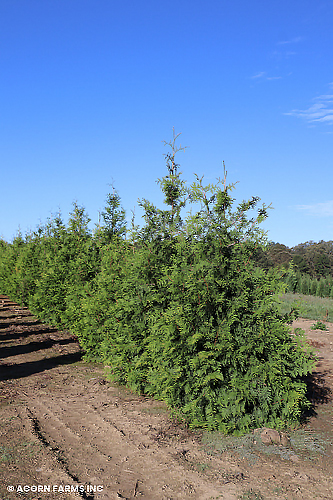
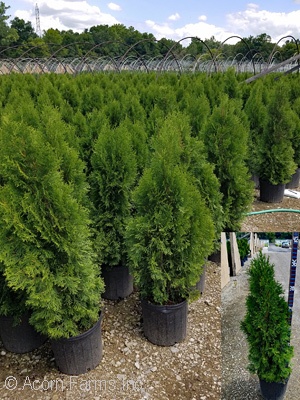
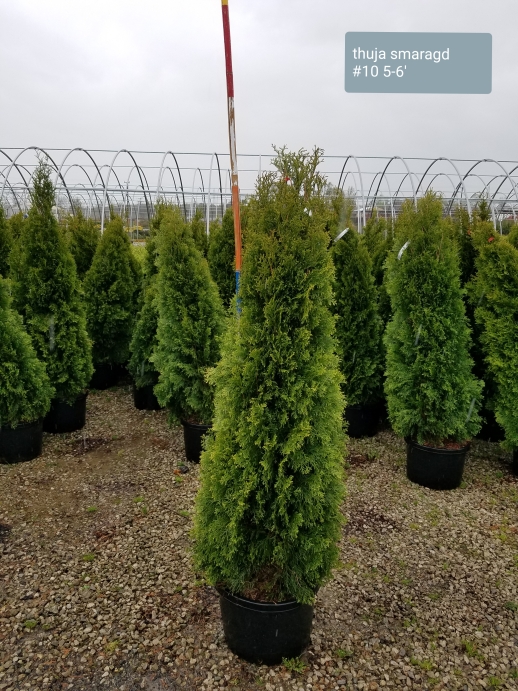
Thuja occidentalis 'Smaragd' is commonly referred to as Emerald Green American Arborvitae, Smaragd Arborvitae or Emerald Arborvitae. It is a popular semi-dwarf evergreen conifer with a compact, narrow, upright habit. It features glossy bright green, flat, scale-like foliage with excellent color retention. It is reliably cold hardy and does not turn bronze in winter. This slow-growing selection is easy to grow and low maintenance. It tolerates pruning in early spring before the onset of new growth and provides a hardy alternative to Cypress.
Emerald Green Arborvitae thrives in full to partial sun in average, evenly moist, well-drained soils. It benefits from some light shade in hot summer climates and a wind break from harsh winter winds. It does not tolerate dry conditions or heavily shady areas. It is ideal as an accent, hedge, privacy screen or foundation plant.
| PLANT | SIZE | TYPE | GALENA | ADD'L | DIG | SOON |
| THUJA OCC SMARAGD | 4-5 ft | 2 | 0 | 0 | 0 | THUJA OCC SMARAGD | 5-6 ft | 8 | 0 | 0 | 0 | THUJA OCC SMARAGD | 6-7 ft | SPIRAL | 1 | 0 | 0 | 0 | THUJA OCC SMARAGD | 8-10 ft | 1 | 0 | 0 | 0 | THUJA OCC SMARAGD | con 10 | SPIRAL | 4 | 0 | 0 | 0 | THUJA OCC SMARAGD | con 10 | 5 ft | 155 | 8 | 0 | 673 | THUJA OCC SMARAGD | con 15 | SPIRAL | 1 | 0 | 0 | 0 | THUJA OCC SMARAGD | con 15 | 5 ft | 10 | 0 | 0 | 0 | THUJA OCC SMARAGD | con 3 | 18-24 in | 1 | 0 | 0 | 0 | THUJA OCC SMARAGD | con 5 | BI | 129 | 0 | 0 | 0 | THUJA OCC SMARAGD | con 5 | 36-42 in | 5 | 0 | 0 | 0 | THUJA OCC SMARAGD | con 5 | SPIRAL | 15 | 0 | 0 | 0 | THUJA OCC SMARAGD | con 7 | SPIRAL | 13 | 0 | 0 | 0 | THUJA OCC SMARAGD | con 7 | 36-42 in | 124 | 0 | 0 | 0 |
Any current Availability will be listed above this line. This item will not be in the cart if there is no Galena stock listed here.
Click for Availability column information and meaning
KEY:
con = containers - available now
Galena (Ready to Go!) Plants that are above ground and available now
Additional (More Plants!) Plants are not in Galena, but in a remote location which is easily accessible. Call your rep for info. They will not be in the Shop.
Dig (In-Ground Field) Plants are still in the ground. Please call your sales rep to place a Dig Order. They will not be in the Shop.
Soon (Coming Soon) Plants are not quite ready but coming soon. Call your rep to inquire. They will not be in the Shop.
(BBnPOT - formerly known as GRSTART - are B&B put into a container - they are available now)
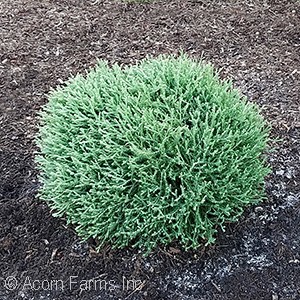
Other Northern White Cedars
Awesome Arbs! (promo flyer)
Available cultivars in this genus: