TOM THUMB COMPACT CRANBERRY COTONEASTER
COTONEASTER API TOM THUMB
Cotoneaster apliculata 'Tom Thumb'
photo courtesy of Bailey Nursery

Genus: COTONEASTER
 Protected Series:
Height: 3-4 Feet Tall
Spread: 4-5 Feet Wide
Color: pink flower
Full Sun Plants
Full Sun Deciduous Shrub Plants
Deciduous Shrub
Zone: 5
#1638
1638.pdf
drought tolerant * deer resistant * birds * salt tolerant *
COTONEASTER API TOM THUMB
Grower Notes:
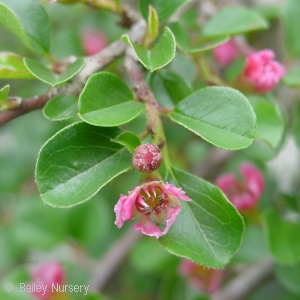
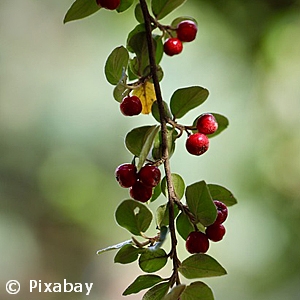
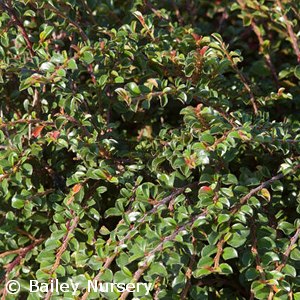
Cotoneaster apliculata 'Tom Thumb' is commonly referred to as Tom Thumb Cotoneaster. It is a smaller, more compact variety that grows low to the ground and is self-rooting. Unlike other cotoneasters, it does not spread beyond its desired space. It has glossy green, fine textured leaves and small light pink flowers in spring followed by fruit in the form of small pomes in shades of red and orange that persist into winter. Excellent brick red fall color.
Tom Thumb Cotoneaster enjoys full to part sun in average, well-drained soils. It will not tolerate standing water. It can handle environmental salt and can thrive in city environments.
| PLANT | SIZE | TYPE | GALENA | ADD'L | DIG | SOON |
| COTONEASTER API TOM THUMB | con 3 | 5 | 0 | 0 | 191 |
Any current Availability will be listed above this line. This item will not be in the cart if there is no Galena stock listed here.
Click for Availability column information and meaning
KEY:
con = containers - available now
Galena (Ready to Go!) Plants that are above ground and available now
Additional (More Plants!) Plants are not in Galena, but in a remote location which is easily accessible. Call your rep for info. They will not be in the Shop.
Dig (In-Ground Field) Plants are still in the ground. Please call your sales rep to place a Dig Order. They will not be in the Shop.
Soon (Coming Soon) Plants are not quite ready but coming soon. Call your rep to inquire. They will not be in the Shop.
(BBnPOT - formerly known as GRSTART - are B&B put into a container - they are available now)
Available cultivars in this genus: